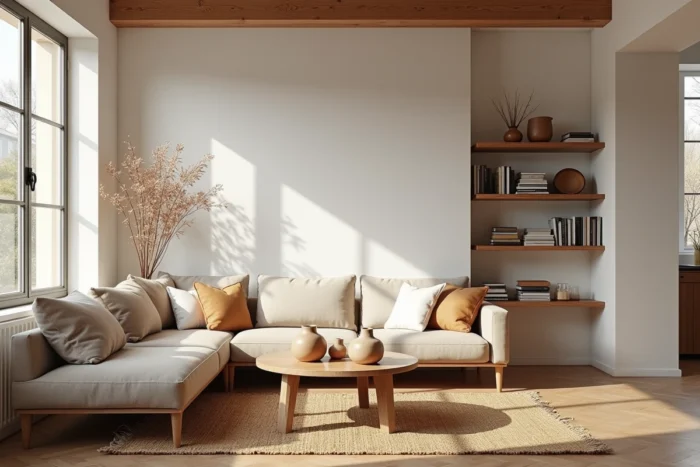
When redecorating a living room, we rarely start by flipping through a trend catalog. We begin with a constraint: a damaged wall to hide, an aging sofa that overwhelms the room, insufficient light in winter. It is from these concrete irritants that decor choices take shape, much more than from an abstract Pantone palette.
The home decor trends that have emerged over the past two years reflect this practical approach. They favor materials with dual functions (aesthetic and thermal performance), colors that correct the flaws of a space, and furniture designed to last rather than to impress in a photo.
Low-carbon materials in interior decoration: beyond simple wood
There is a lot of talk about wood, rattan, and linen. But the real shift over the past two years concerns the low-carbon labeled ranges from flooring manufacturers. Paints, plasterboard, decorative concrete: several manufacturers now offer verified environmental declaration sheets, transforming the ecological argument into a selection criterion as clear as a color reference.
In practical terms, this changes the way we select a wall coating or floor finish. We no longer compare only the visual result and the price per square meter, but also the declared carbon impact on the product sheet. For a living room wall, low-carbon polished concrete and bio-sourced paint provide a visual result similar to their classic counterparts, with an additional selling point when reselling the property.
Among the inspirations from iDéco Maison, we find concrete associations between these materials and living room or bedroom atmospheres, which helps visualize the result before placing an order.
Energy renovation and home decor: two projects in one
Since the gradual implementation of RE2020 and the tightening of the schedule on energy sieves, an increasing number of renovation projects combine decoration and thermal improvement. Ademe has noted a significant increase in requests for support for work combining summer comfort and interior makeovers in its recent reports.
Blinds, curtains, and dark colors for summer comfort
The idea is not new, but its application in decor is. Today, we choose an interior blind as much for its ability to block heat as for its color. Thick linen curtains, recycled fabric blackout shades, and dark shades on south-facing walls limit glare while creating an enveloping atmosphere.
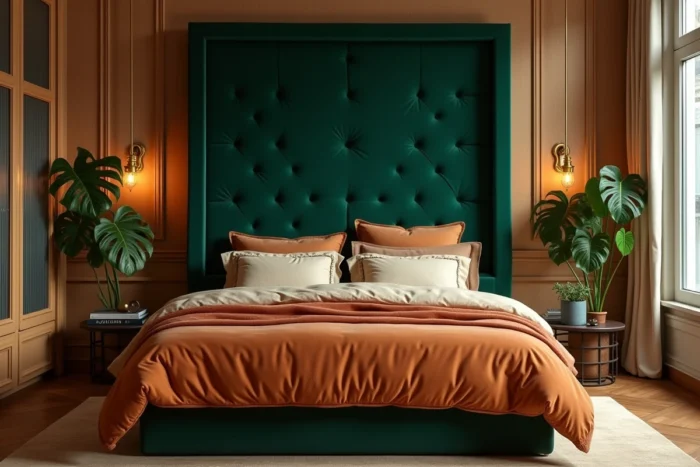
In a southwest-facing living room, a wall painted in deep sage green or dark terracotta absorbs direct light and reduces the feeling of overheating. It’s a decor choice that solves a thermal problem without altering the structure.
Interior insulation and space constraints
When insulating a wall from the inside, we lose a few centimeters of depth. This setback requires rethinking the layout of the TV unit, bookshelf, or sideboard. Feedback varies on this point depending on the thickness of the chosen insulation, but most recent projects incorporate custom furniture or thin wall shelves that compensate for the loss of floor space.
- Replacing a deep low cabinet with wall shelves frees up passage and visually lightens the room after insulation.
- Choosing light shades on the insulated wall compensates for the shrinking effect, especially in small living rooms.
- Combining textured wallpaper with insulation helps to mask any surface irregularities after work.
Trendy colors for the living room and bedroom: choosing based on the room
The palettes that circulate change each season, but the real question remains that of the available natural light. A color that works in a glass-walled loft in Bordeaux can overwhelm a ground-floor apartment in Lille.
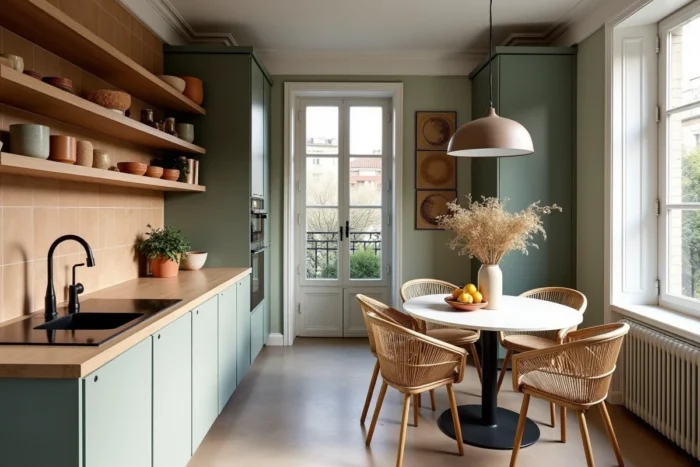
There is a marked preference for deep greens (sage, olive, khaki) in living spaces, and for powdery tones (old rose, rosy beige, warm off-white) in bedrooms. The common point: colors that do not turn gray under low artificial lighting, which is the most reliable test before buying a can of paint.
Colour-drenching technique applied to the field
Colour-drenching involves painting walls, skirting boards, door frames, and ceilings in the same shade. On paper, it’s spectacular. In practice, this technique works best in small rooms (toilets, entryways, offices under ten square meters) where the immersion effect creates a strong identity without overwhelming the volume.
In a large living room, the result can quickly become monotonous. We prefer to apply the shade to just one wall and the ceiling, leaving the adjacent walls in a contrasting neutral tone. This maintains the enveloping effect without saturating the space.
Vintage furniture and second-hand pieces: sorting out best practices
Vintage furniture remains very present in home decor trends, but not all second-hand purchases are equal. A 70s armchair found at an online flea market may arrive with sagging cushions, a fabric imbued with stubborn odors, or a weakened structure.
Before integrating a vintage piece into an interior, three checks are essential:
- Test the seat by actually sitting on it (not just looking at the photo) to assess the density of the remaining foam.
- Check the wood joints: a creaky or wobbly piece will require professional re-gluing, which can exceed the cost of the purchase.
- Smell the fabric closely, as a lingering smell of tobacco or dampness does not disappear with a simple steam cleaning.
Well-executed vintage style relies on two or three strong pieces (a coffee table, a light fixture, a mirror) integrated into a sober contemporary decor. Accumulating finds from different eras without a common thread turns a living room into a permanent flea market.
The enduring decor trends share a common trait: they address a real housing problem rather than a fashion effect. Low-impact materials, colors suited to local brightness, rigorously selected vintage furniture: these are choices that withstand the test of time because they come from the ground up, not from a mood board.