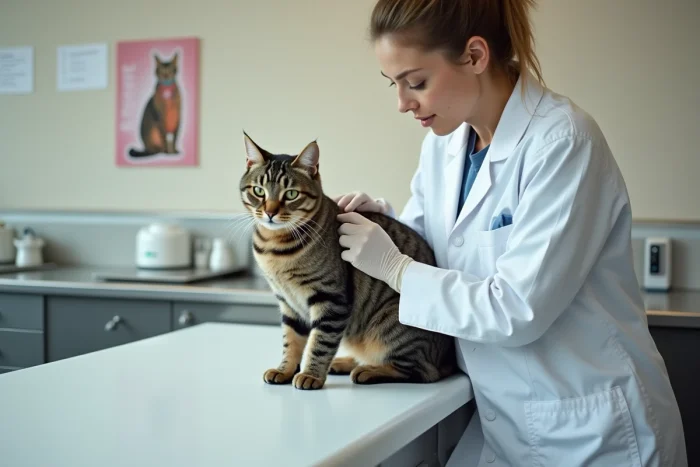
A healthy cat emits very little body odor. When an unpleasant smell persists around the rear end, it almost always indicates a specific dysfunction: engorged anal glands, digestive imbalance, or a localized dermatological issue. Identifying the exact source of this odor allows for swift action and prevents the situation from worsening.
Secretion of the cat’s anal glands: the mechanism behind the odor
Cats have two small sacs located on either side of the anus, called anal glands (or anal sacs). These pockets produce a very strong-smelling oily liquid, normally expelled in small amounts with each defecation. This liquid serves as a territorial marker and an olfactory signal between peers.
The problem arises when these sacs do not empty properly. The liquid stagnates, thickens, and eventually becomes infected. The odor then becomes permanent and significantly more acrid than the normal secretion. It is referred to as impaction when the sac is blocked, and as an abscess when the infection progresses.
Several signs accompany this blockage: the cat rubs its rear end on the ground (sledding sign), licks the anal area compulsively, or shows visible discomfort when sitting. If you are looking for solutions if my cat smells bad from the rear, the first reflex is to check the condition of these glands with a veterinarian.
Obesity and sedentariness: underestimated risk factors for anal odors
The anal glands empty due to the pressure exerted by well-formed stools during their passage. A cat with stools that are too soft or too small does not generate enough mechanical pressure to release the contents of the sacs.
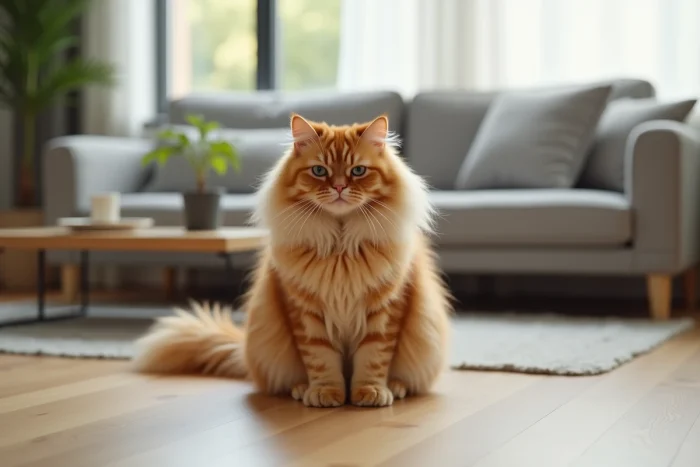
Overweight cats face two disadvantages. On one hand, the excess fatty tissue around the anus hinders the natural compression of the glands. On the other hand, these cats move less, which slows down transit and reduces the frequency of defecation. According to guidelines published by the International Society of Feline Medicine (ISFM) in 2022, weight loss is an integral part of preventing anal sac disorders.
An indoor cat that is fed ad libitum and is not physically stimulated thus presents a risk profile. Before even addressing the odor, it is necessary to reassess the food ration and introduce daily play sessions to stimulate transit.
Diet and intestinal microbiota: the odor begins in the digestive tract
Diet impacts the odor from the rear in two ways. The first, direct: kibble rich in poorly identified by-products or excessive grains produces more odorous stools of varying consistency. The second, more subtle, concerns the intestinal microbiota.
Research published in the Journal of Feline Medicine and Surgery (Lidbury et al., 2023) shows that chronic microbiota disorders (recurrent diarrhea, colitis, persistent soft stools) promote inflammation of the anal sacs and incomplete emptying. The link is logical: abnormal stools disrupt the self-emptying mechanism of the glands, and local inflammation maintains the bad odor.
Adjusting your cat’s diet to reduce odors
A sudden dietary change often exacerbates the problem by further destabilizing the intestinal flora. The transition should take place over about ten days, gradually mixing the old and new food.
- Favor a diet with a high animal protein content and identified sources (chicken, turkey, fish) rather than vague mentions like “animal by-products”
- Check for the presence of fibers (beet pulp, psyllium) that promote well-formed stools and facilitate the emptying of the anal glands
- Consider specific feline probiotics if the cat suffers from chronic digestive issues, after veterinary advice
Firm and regular stools remain the best indicator of healthy transit and proper emptying of the anal glands.
Other causes of odor from the cat’s rear
The anal glands and diet explain the majority of cases, but other situations deserve to be checked.
Soiling related to long hair
Long-haired cats (Persian, Maine Coon, Ragdoll) sometimes retain stool residues in the fur around the anus. This purely mechanical problem can be resolved by regular grooming of the perianal area: trimming the hair to a few millimeters with rounded-tip scissors, or asking the groomer for a hygienic cut.
Intestinal parasites
An infestation by worms (roundworms, tapeworms) alters the consistency and odor of the stools. Segments of tapeworm, visible as small white grains around the anus, can also irritate the area and cause excessive licking. An appropriate dewormer is generally sufficient to resolve the issue.
Persistent diarrhea or colitis
Diarrhea lasting more than two days causes irritation of the skin around the anus and a marked odor. The anal mucosa, constantly moist, becomes a breeding ground for secondary bacterial infections.
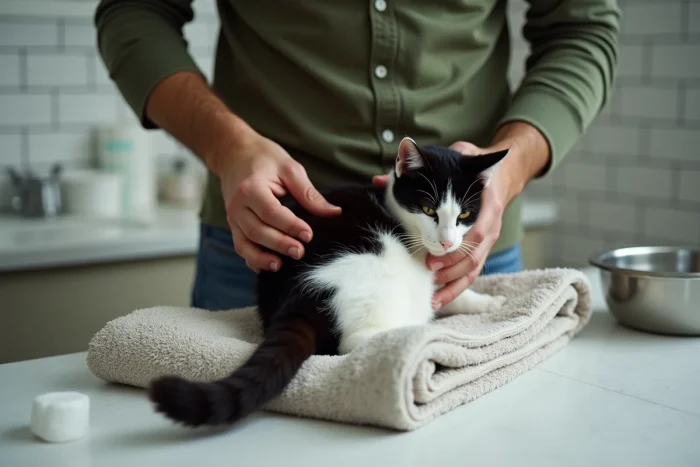
- A gentle cleaning with warm water (without scented soap) after each episode protects the skin
- An episode of diarrhea lasting more than 48 hours warrants a veterinary consultation
- Cats dehydrated by diarrhea need constant access to fresh water
When to consult a veterinarian for a smelly cat
Any odor that persists after local cleaning and a dietary adjustment of two weeks requires a professional examination. An untreated abscess of the anal glands can rupture and cause a fistula, which is much longer and more painful to treat.
The veterinarian performs a manual emptying of the anal sacs when they are engorged. In case of infection, a local or oral antibiotic treatment is prescribed. For cats suffering from recurrent impactions, surgical removal of the anal glands may be considered, but this option is reserved for stubborn cases.
A cat that smells bad from the rear does not lack hygiene. Its body signals a dysfunction, most often related to the anal glands, diet, or weight. Correcting these factors resolves the vast majority of situations without heavy intervention.