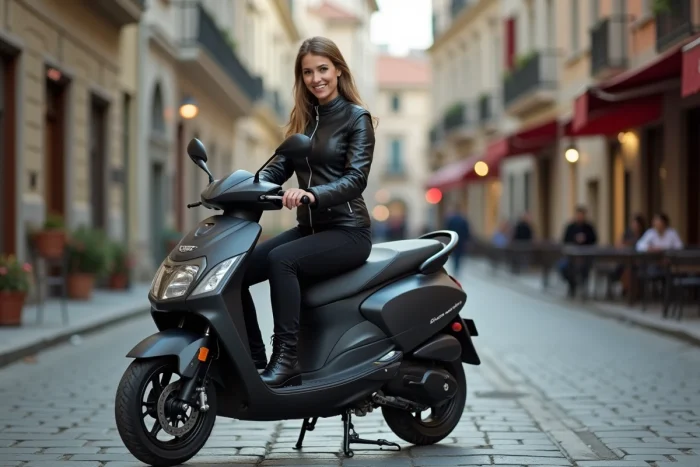
Choosing a maxi scooter when you are under 1.70 m is primarily a matter of geometry. Seat height, weight in running order, seat width at the narrowest point: these three parameters determine whether you will be able to place your feet flat on the ground when stopped or if every red light will become a test of balance. Before comparing models, it is essential to know which thresholds make riding truly comfortable for a smaller frame.
Seat height and weight thresholds: the data that matters for a rider under 1.70 m
A seat height greater than 820 mm poses real difficulties for those under 1.70 m. This benchmark, documented by specialized sources in motorcycle ergonomics, constitutes the limit beyond which ground contact becomes too precarious to inspire confidence when stopped.
Weight exacerbates the problem. A typical conventional maxi scooter often exceeds 200 kg in running order. Recovering from a low-speed imbalance with a vehicle of this weight, with feet barely touching the ground, requires a strength that many smaller riders do not possess. Conversely, the Zero Motorcycles LS1 (electric) weighs 134 kg and has a seat height of 780 mm, a combination still rare in the maxi scooter segment.
| Model | Seat Height | Weight (running order) | Engine |
|---|---|---|---|
| Zero LS1 | 780 mm | 134 kg | Electric |
| Honda Forza 350 | Low (varies by version) | Approximately 180 kg | Conventional |
| Yamaha TMAX | Medium-high | Over 200 kg | Conventional |
| Suzuki Burgman 400 | Medium | Over 200 kg | Conventional |
| BMW C 400 GT | Medium | Approximately 200 kg | Conventional |
This table highlights a considerable gap between the recent electric segment and conventional references. The weight criterion is often overlooked in comfort or engine-oriented comparisons, while it weighs as much as seat height in the maneuverability perceived by a lighter rider.
Finding a maxi scooter suitable for smaller riders therefore requires systematically cross-referencing these two values, rather than relying solely on the technical specifications of the engine.
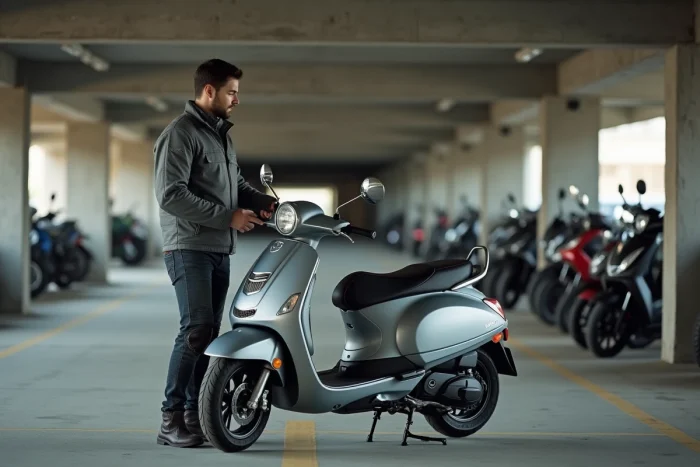
Lowered seat and lowering kit: modifying a maxi scooter for better accessibility
Limiting yourself to “low original” models drastically reduces the choices. Specialized forums frequently recommend two inexpensive and reversible interventions.
- Shaped seat foam: a saddler removes between one and three centimeters of foam from the seat. Comfort decreases slightly on long trips, but the gain in ground contact is immediate. Expect a workshop intervention, not a DIY project.
- Rear suspension lowering kit: by reducing the travel of the shock absorber, the entire chassis is lowered. The rake angle changes, which alters cornering behavior. Professional adjustment is necessary to avoid degrading road holding.
- “Low seat” versions offered by some dealerships: a few manufacturers (notably in the motorcycle segment) offer low seats as factory options. In the maxi scooter segment, this offer remains limited, but it is worth asking the dealer before purchasing.
These solutions broaden the range of possibilities. A Yamaha TMAX or a BMW C 400 GT, too high in standard configuration, can become accessible after modifying the seat or suspension.
Three-wheeled scooters and stability: an alternative for lighter riders
Three-wheeled scooters (like the Piaggio MP3 or Yamaha Tricity) often come up in discussions about the safety of smaller riders. The two-wheel front end offers stability at low speeds and when stopped that conventional two-wheelers do not provide.
This stability comes at a cost: the total weight is generally higher than an equivalent two-wheeler, and the width of the front end complicates maneuvering in dense traffic. For strictly urban use with frequent stops, the three-wheeler compensates for the height deficit with a more reassuring ground contact.
However, on highways or fast roads, the extra weight and lateral wind resistance partially negate this advantage. The choice therefore depends on the dominant type of journeys.
Electric maxi scooters and small frames: why the segment changes the game
Recent electric maxi scooters have a radically different technical profile from conventional ones. The absence of a bulky combustion engine allows for placing the mass (batteries) very low in the chassis, which lowers the center of gravity.
The test of the Zero LS1 highlights a flat floor described as “reassuring for smaller riders”. This type of platform, combined with a contained weight and a seat under 800 mm, creates a configuration still rare in the conventional market.
The trade-off lies elsewhere: the range of electric models remains lower than that of conventional ones for long mixed journeys (city and highway). For primarily urban use with moderate daily distances, this trade-off clearly favors electric if physical accessibility is the priority.
Test ride at the dealership: the concrete checks before purchase
No technical sheet can replace a static and dynamic test ride. During a visit to the dealership, three points deserve particular attention for a smaller rider.
- Place both feet flat on the ground, scooter upright, without leaning: if you cannot do this, the model is too high even with a shaped seat.
- Test the center stand: lifting a maxi scooter over 200 kg onto its center stand requires a brief but intense effort. Ensure that the action is achievable without excessive strain.
- Manoeuvre at walking speed in a parking lot: low-speed maneuverability reveals the limits of a lighter frame much more than riding at 50 km/h.
Also ask the dealer if they offer a low seat as an option or if they can direct you to a partner saddler. This question, asked before ordering, prevents discovering the issue after delivery.
The most reliable parameter for a smaller frame remains the ratio between seat height and weight. A model with a seat height under 800 mm and under 180 kg offers a comfortable working base. Beyond that, modifying the seat or suspension becomes almost mandatory, which adds a cost and a delay to integrate right from the initial budget.