A comfortable and functional home relies on a foundation of specific equipment, partly defined by French regulations. The decree of July 31, 2015, implemented under the ALUR law, sets a minimum list of mandatory elements for a furnished home to be considered “ready to live in”: bedding, cooking plates, refrigerator, table, seating, storage, lighting, and cleaning equipment. This framework serves as a reference for both landlords and tenants looking to equip a space rationally.
Connectivity and digital equipment in a modern home
The internet box is now on par with the washing machine or dishwasher in the expectations of occupants of a furnished home. It is no longer a differentiating advantage: Wi-Fi has become a standard of comfort just like hot water.
This evolution changes the way we think about layout. Before choosing a sofa or dining table, checking network coverage and ensuring a stable Wi-Fi access point conditions the daily use of the home, whether for remote work, streaming, or home automation. A home without a reliable connection loses attractiveness for both tenants and seasonal rental travelers.
To precisely identify what constitutes the mandatory foundation and what is an added benefit, the list proposed by Capitaine Immo details the expected equipment category by category.
Functional kitchen: the equipment that shapes daily life
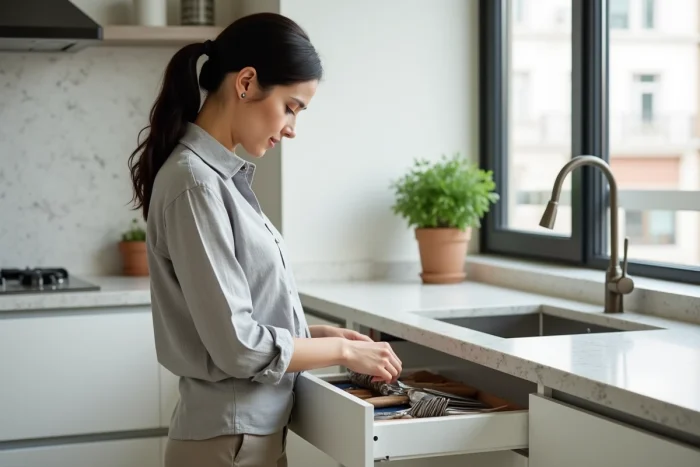
The kitchen concentrates the majority of regulatory equipment. The 2015 decree mandates cooking plates, an oven or microwave, a refrigerator with a freezing compartment, sufficient dishes, and cooking utensils. This legal minimum also corresponds to the practical minimum for preparing a complete meal.
Beyond this base, two appliances radically change daily comfort:
- The dishwasher, which frees up time and reduces water consumption compared to manual washing, especially in a home accommodating several people or short-stay travelers
- The washing machine, which prevents tenants or occupants from relying on an external laundromat, a criterion that has become decisive in choosing a furnished apartment
- A hood or extraction system, often overlooked, which preserves air quality and protects walls and furniture from grease splashes
A common mistake is to invest in high-end appliances that are poorly sized. A refrigerator that is too large in a studio wastes space and energy. Adapting the size of appliances to the area of the home matters more than their price.
Living room and bedroom: balancing comfort and clutter
The living room and bedroom pose a constant question of balancing the number of furniture pieces and circulation space. The decree requires a table, seating, storage, and complete bedding (duvet or blanket). However, adhering to this list is not enough to create a pleasant living environment.
Living room: the table as a pivot
The dining table is the most structuring piece of furniture in a small apartment. It serves as a desk, auxiliary work surface, and dining area. Choosing a extendable or foldable table allows for reclaiming floor space when not in use, a critical point in homes of less than 30 m².
Seating should be stackable or lightweight for the same reason. A convertible sofa can replace a guest bed in a studio, provided the mechanism is reliable and the mattress thick enough for regular use.
Bedroom: bedding as a top priority
The quality of the bedding determines the overall perception of the home. A worn or unsuitable mattress degrades the stay experience faster than any other flaw. Investing in bedding before decoration remains the best budget allocation.
Bedroom storage must include at least a wardrobe or closed cabinet. Open shelves, which are more economical, accumulate dust and create a sense of disorder, especially in seasonal rentals where travelers expect an orderly space upon arrival.

Lighting and cleaning equipment: two underestimated areas
The 2015 decree explicitly mentions lighting and cleaning equipment. These two areas are often addressed last, even though they directly affect perceived comfort.
A poorly lit home appears smaller and less welcoming. Providing at least one light point per room with adjustable lighting (dimmer or supplementary lamp in addition to the ceiling light) transforms the atmosphere without heavy renovations. Warm temperature bulbs are suitable for living spaces, while neutral tones are appropriate for the kitchen and bathroom.
Cleaning equipment includes a vacuum cleaner or broom, a bucket, and basic cleaning products. In furnished rentals aimed at travelers, providing this kit avoids complaints and protects the home between stays. A compact cordless vacuum represents a space and usability gain compared to a bulky canister model.
Prioritizing equipment based on the occupancy profile of the home
Equipment choices vary depending on whether the home accommodates a long-term tenant, short-stay Airbnb travelers, or an owner-occupant. A tenant in a traditional lease values the washing machine and storage. A seasonal rental traveler expects Wi-Fi connectivity, quality bedding, and complete dishware. An owner-occupant can spread their purchases over time.
The regulatory foundation of the 2015 decree applies to all furnished homes, but the order of investment depends on the occupancy profile. Starting with bedding, the kitchen, and connectivity covers the priority needs regardless of the situation. Stylish furniture and decoration come next, once functional comfort is ensured.