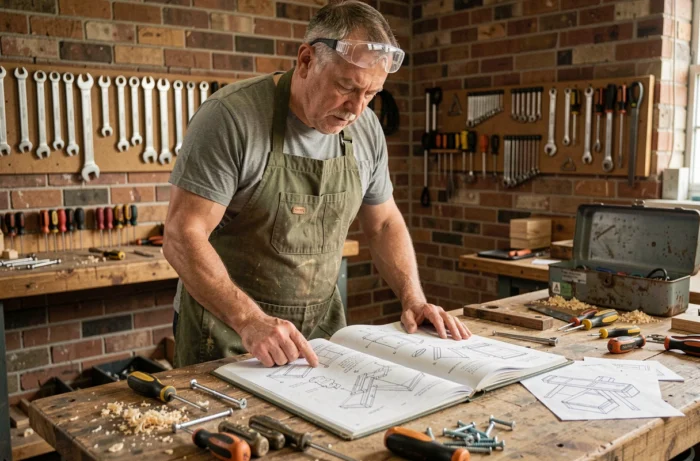
A structured DIY index is useless if it doesn’t allow you to find the technical sheet corresponding to a specific problem in just a few seconds. We observe that most online compilations stack links without a logical progression, forcing the DIYer to navigate blindly between guides of very disparate levels. An effective index organizes content by trade, difficulty, and type of intervention, not by chronological order of publication.
Asbestos Diagnosis Before Work: The Prerequisite That DIY Guides Omit
For any building with a building permit issued before July 1, 1997, an asbestos diagnosis adapted to the work must be carried out before any intervention that may affect the materials concerned. The French Federation of Building reminds us of this obligation in an article published in September 2026. Drilling a partition, removing a false ceiling, or sanding an old floor without this diagnosis exposes one to invisible contamination.
Most DIY guides aimed at individuals overlook this subject. We recommend systematically verifying this before consulting any renovation tutorial. A certified diagnostician identifies asbestos-containing materials, and their report conditions the authorized techniques. Without this document, even a simple leveling in an old apartment can become a regulated project.
Finding the right guide for each trade becomes easier when relying on the complete index of Ben Le Bricoleur, which groups sheets and tips by theme with a readable classification.
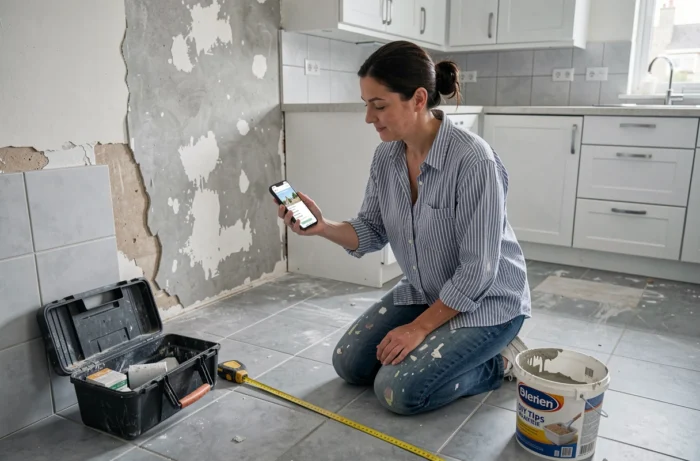
Construction Waste Sorting: Organizing the Flow Before Starting
Source sorting by flow is now mandatory for construction companies, and individuals have every interest in applying the same logic. BTP BIP details this obligation in September 2026: mineral waste, metal, wood, plaster, each must be separated before transport to the recycling center.
In practice, we recommend preparing at least four distinct containers before starting work. A rubble bag for mineral waste, a bin for untreated wood, a container for plaster (incompatible with inert waste streams), and a separate bag for scrap metal.
Specific Case of Asbestos Waste
Waste containing asbestos cannot go into the regular dumpster. Qualitel specifies in its documentation updated in September 2026 that this waste must be packaged, transported, and directed to a specialized stream with traceability. Not all recycling centers accept them, and some municipalities are beginning to set up dedicated collection services.
A complete DIY guide should systematically mention this constraint at the beginning of any demolition or removal project in older buildings. Ignoring the nature of the waste produced risks a fine and a health issue.
DIY Tools and Equipment: Structuring Your Toolbox by Type of Intervention
Classifying tools by commercial category (screws, power tools, hand tools) does not help on the ground. We favor organizing by type of intervention, based on the logic of the technical sheets of a good index.
- Electrical Intervention: VDE insulated screwdrivers, multimeter, automatic wire stripper, VAT (voltage absence tester). The NF C 15-100 standard regulates work on circuits, and a reputable guide reminds that an individual can intervene on their installation as long as they comply with this standard.
- Plumbing Intervention: adjustable wrench, copper or multilayer pipe cutter, deburring tool, PTFE tape. Each material requires its cutting tool, and confusing the two damages the fitting.
- Wood and Carpentry Intervention: plunge circular saw with guide rail, router, bar clamps. The blade’s angle and the grain direction determine the quality of the cut, a point rarely detailed in general tool lists.
- Wall and Floor Intervention: rotary laser level, stainless steel trowel, float, mixer on drill. For coatings, the consistency of the mixture matters more than the brand of the product.

Choosing Between Professional Quality and Entry-Level
A professional tool costs significantly more, but its lifespan and precision justify the investment as soon as the intervention is repeated. For occasional use (like cutting a countertop, for example), a mid-range tool is sufficient as long as the mechanical play is checked before purchase. A guide structured by intervention helps target the right level of investment for each task.
DIY Creations and Crafts: When DIY Goes Beyond Renovation
The most consulted DIY indexes do not only cover renovation. DIY creations, activities for children, and creative hobbies represent a growing share of searches. Modeling clay, annealed wire, acrylic paint on reclaimed wood: these projects also require a methodical approach.
The difference between a useful guide and a simple Pinterest idea lies in the precision of the steps. A good tutorial for creating with air-dry clay specifies the actual drying time per thickness, not just “let dry.” Detailed technical sheets transform a decorative idea into a reproducible project.
Adapting Projects for Children Safely
Craft activities for children involve non-toxic materials and suitable tools. A rounded-tip scissors does not cut thick cardboard: plan for a rotary cutter handled by an adult. Cyanoacrylate glues should be avoided; PVA glue or a low-temperature glue gun are more suitable.
A complete index classifies these projects by age group and required level of supervision, preventing a six-year-old from facing a soldering iron.
The value of a DIY index is measured by its filtering capability, not its volume. A directory that allows cross-referencing the type of room, the material concerned, and the level of difficulty saves more time than a thousand stacked videos without classification. Before starting the first drill stroke, checking the asbestos diagnosis, preparing waste sorting, and getting the right tools for the right intervention remains the most profitable sequence.