
On a a night bus trip from Paris to Lyon, we thought that sleeping on a Blablacar bus would be simple: reclining seat, earplugs, and we would arrive fresh in the morning. The reality turned out to be more nuanced. Between the limited reclining of the seats, technical stops, and operational uncertainties, a long-distance night bus journey requires real preparation. Here’s what we learned after several night trips.
Delays and bus changes: the real enemy of sleep on night journeys
Articles discussing sleeping on buses focus on neck pillows and seat position. They miss the main issue: operational uncertainties fragment sleep much more than discomfort.
On Trustpilot, the rating for Blablacar buses (via blablabus.de) hovers around 1.4 out of 5 with several hundred reviews. Recent feedback from 2025 and 2026 mentions frequent delays, late cancellations, and bus changes during the night. When we are asked to get off at a bus station to wait for another vehicle, the night is cut in half.
We experienced an unexpected transfer on a night trip. Result: more than an hour standing in a poorly lit station, backpack on, waiting for a replacement bus. Even with the best pillow in the world, the sleep accumulated before the stop does not compensate for this disruption. The uncertainty about the arrival time also prevents relaxation, as we keep an eye on the phone instead of closing our eyes.
Before booking a night trip, checking the reviews on the interior of Blablacar buses helps to get an idea of the actual conditions on the targeted line, beyond the promises of the product sheet.
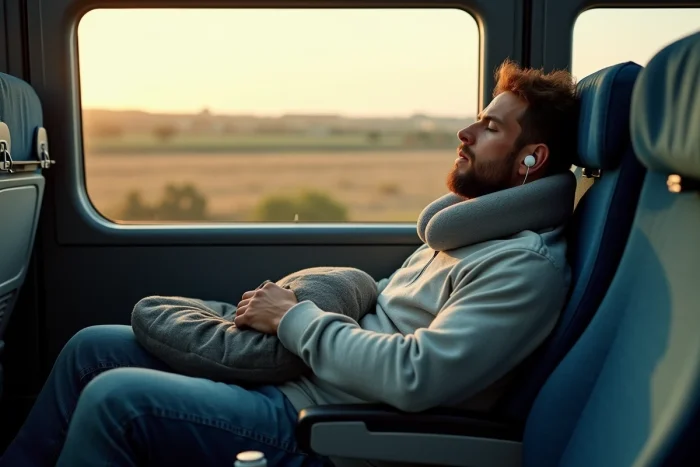
Blablacar bus seats: reclining and real space to sleep
The reclining of seats in long-distance buses remains modest. We’re talking about an angle that allows for a slight lean back, not lying down. On a daytime trip, it’s enough to rest. On a night trip of more than eight hours, the semi-seated position eventually weighs on the neck and lower back.
Several travelers on forums compare Blablacar buses to FlixBus. Testimonials collected on Caradisiac in 2025 indicate that some passengers slept better on Blablacar buses than on FlixBus, despite comparable seat specifications on paper. Feedback varies on this point, as the vehicle model changes depending on the line and subcontractor.
What really changes from one bus to another
The condition of the vehicle matters as much as its technical specifications. A recent bus with adjustable headrests and functional USB ports offers a very different experience from an older vehicle where half the ports are out of order.
The window seat remains the wisest choice for sleeping. You can rest your head against the wall, which stabilizes the neck. On the aisle side, every neighbor passing to the restroom wakes you up.
Survival kit for a long-distance night bus
Comfort on a night bus does not only depend on the vehicle. Personal equipment makes the difference between a sleepless night and a few hours of restorative sleep.
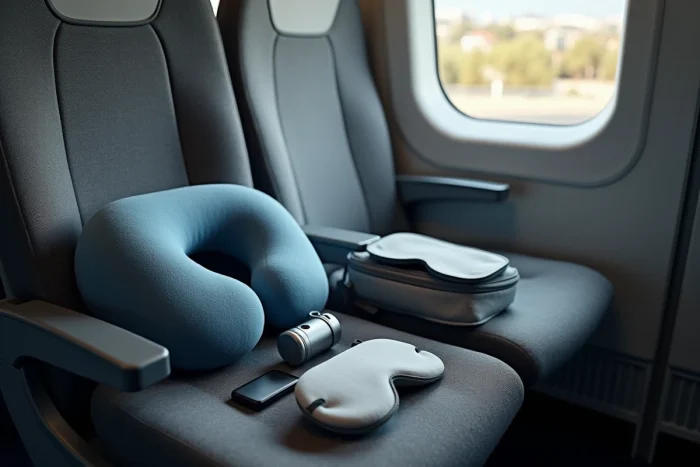
- A firm neck pillow (not inflatable) keeps the head without sagging after an hour, unlike soft models that lose their shape
- Foam earplugs combined with noise-canceling headphones help cover the hum of the engine and the conversations of neighbors who are not sleeping
- An opaque sleep mask blocks dashboard lights and the headlights of oncoming vehicles, which penetrate the thin curtains of buses
- An extra layer (sweater or light blanket) compensates for the air conditioning, often set too low at night
Preparing your kit before boarding avoids rummaging through your bag in the dark. Take out everything you need and stow the bag in the hold.
Blablacar night bus: who does it really work for
Sleeping properly on a Blablacar bus depends on three factors: the duration of the trip, personal tolerance to noise and movement, and the reliability of the chosen line.
On a trip of five to six hours, you arrive tired but functional. You grab two to three hours of fragmented sleep, which is enough to get through the day. On a trip of more than ten hours (like Paris-Barcelona, for example), the sleep debt accumulates and recovery takes more than a day.
The economic calculation against the night train
The night bus remains significantly cheaper than a train ticket on the same routes in France. The price difference can be significant, especially when booking at the last minute. But the night train, when available on the route, offers a sleeper where you can lie down.
The real trade-off is between the price of the bus and the cost of an added hotel night to a daytime trip. On some routes, paying a little more to travel during the day and sleep in a bed comes to the same total budget, with much better recovery.
The long-distance night bus offer in France is evolving. The gradual disappearance of BlaBlaBus in favor of FlixBus, reported in late 2025, reduces the available options. Checking the availability of night lines a few weeks before departure avoids unpleasant surprises on the day of booking. Comfort on a night bus remains an acceptable compromise for a short and well-prepared trip, much less so for a journey of more than eight hours.