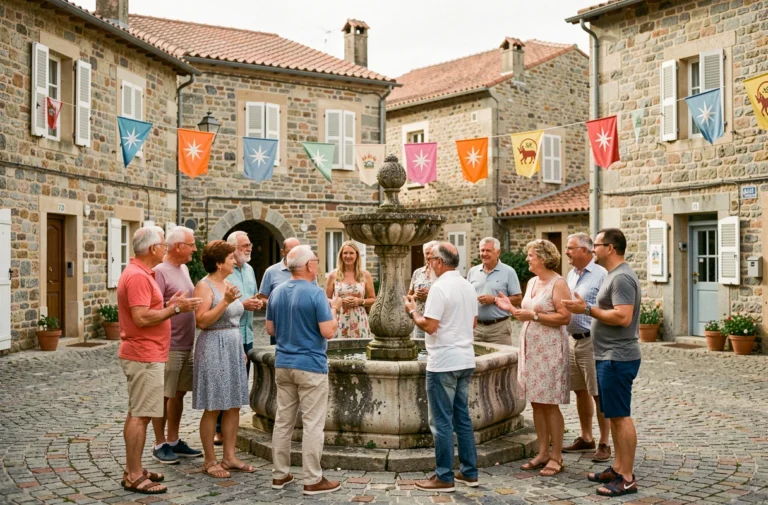
What distinguishes a cherished gift from one relegated to the back of a closet? In 2026, the French seem to weigh three criteria when giving: the originality of the gift, its local roots, and its real utility in daily life. These three dimensions do not always overlap, and it is precisely in their discrepancies that the most telling choices emerge.
Daily utility versus made in France label: the weight of each criterion
Field feedback in the promotional products sector points to a gap between the perceived value of a gift and its long-term retention. A product made in France, even if original, often ends up unused if it does not meet any concrete need. Conversely, daily use remains the best factor for retaining a gift.
This observation shifts the hierarchy of criteria. French origin adds a symbolic dimension, but it does not mechanically enhance memorization or attachment to the product if it lacks a clear function.
| Criterion | Effect on immediate appreciation | Effect on long-term retention |
|---|---|---|
| Originality | Strong (surprise effect) | Variable (depends on utility) |
| Made in France | Positive (symbolic value) | Low if the item is not used |
| Daily utility | Moderate (less spectacular) | Strong (the item remains in circulation) |
| Personalization | Strong (emotional dimension) | Strong (lasting emotional bond) |
This table summarizes a paradox that many brands underestimate: the cost premium of made in France does not guarantee loyalty to the product. Personalization, on the other hand, combines immediate emotional effect and durability of attachment.
An analysis published on the Scoopium website to discover confirms that the expectations of the French are structured around this combination of local origin and experiential dimension.
Made in France gift: the question of proof of origin
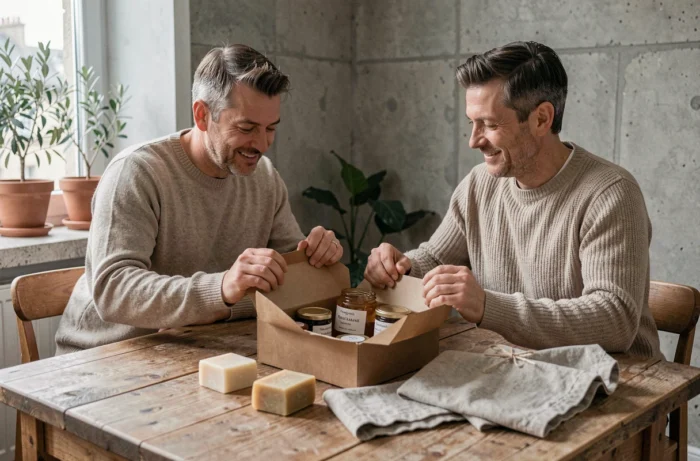
The “made in France” label suffers from a verification problem. Being an exhibitor at a trade show dedicated to made in France does not constitute certification. The organizer does not necessarily publish specific manufacturing criteria, leaving ambiguity about the reality of production.
For gifts presented as French, the origin must be proven, not just claimed. This involves verifying three concrete elements:
- Are the main components of the product sourced in France or merely assembled on the territory?
- Does the manufacturer have a recognized label (Origine France Garantie, EPV) or does it simply rely on a tricolor flag on the packaging?
- Are the transformation stages (and not just the packaging) located in France?
This distinction has a direct impact on the perception of the gift. A recipient who discovers that their “made in France” product was made elsewhere loses trust in the gesture, even if the item is of good quality. Transparency about the manufacturing chain becomes a criterion of originality in itself.
Second hand and reuse: originality through rarity
Competitors focus on new, artisanal, or technological products. An angle absent from most selections concerns second-hand gifts, which have become a common practice rather than a marginal one.
According to an IFOP study from 2025 relayed by EnvyNest, second-hand gifting is already an established practice, not just an ecological intention. Originality no longer comes solely from the novelty of the product, but from its rarity, its history, or the personalization it receives.
A vintage item found and restored, an annotated old book, a revamped piece of furniture: these gifts simultaneously meet the demand for originality and the ecological constraint. They also sidestep the price issue, as reuse allows access to higher quality ranges for a budget comparable to that of mid-range new items.
Regulation and packaging: a constraint that changes practices
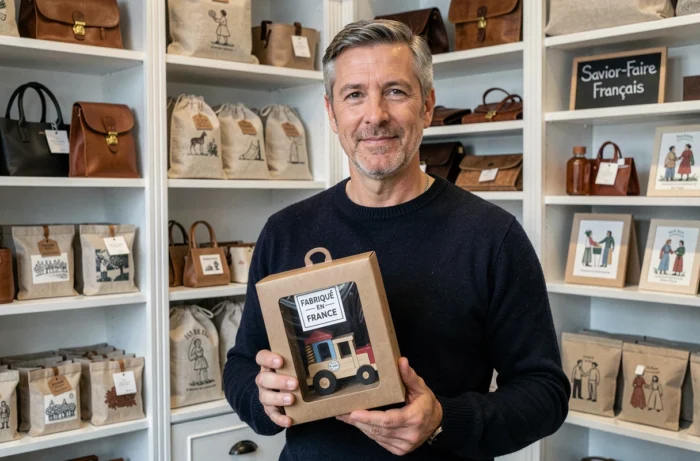
French regulations are pushing gifts towards reuse and traceability of packaging. A producer responsibility extended (REP) system dedicated to professional packaging is set to come into effect soon. For companies that offer gifts to their clients or employees, this means that the packaging itself becomes a regulated choice criterion.
Single-use gift boxes, plastic overwrapping, and disposable presentations are losing ground to reusable solutions. Some brands are already incorporating packaging into the gift (reusable wooden boxes, fabric pouches, deposit food containers).
Corporate goodies and promotional items: the gap between intention and impact
The corporate gift market illustrates the tension between the three criteria. Budgets allocated to personalized goodies and promotional items steer choices towards organic, recycled, or ecological products. However, the actual impact of these gifts depends less on the material than on the relevance of the item for its recipient.
A recycled plastic pen handed out en masse at a trade show is unlikely to be kept, even if it ticks the ecological box. A recycled leather notebook, personalized with the recipient’s name, has a much higher retention rate. The difference lies not in the unit price but in the prior consideration of usage.
- Goodies with a high retention rate are those that replace an item the recipient would have bought themselves (water bottle, charger, bag)
- Local food products (gourmet gift boxes, fine grocery items) work well because they are consumed, thus never “unused”
- Purely decorative items or technological gadgets without a clear function have the highest abandonment rate
The choice between French brands and imported products thus hinges less on the label than on the suitability of the item to the recipient’s daily life.
The data converge towards a simple conclusion. In 2026, an original and French gift is not enough if it is not useful. Daily utility, personalization, and verifiable traceability of origin form the real decision triangle for the French, far from suggestion lists categorized by occasion or budget.