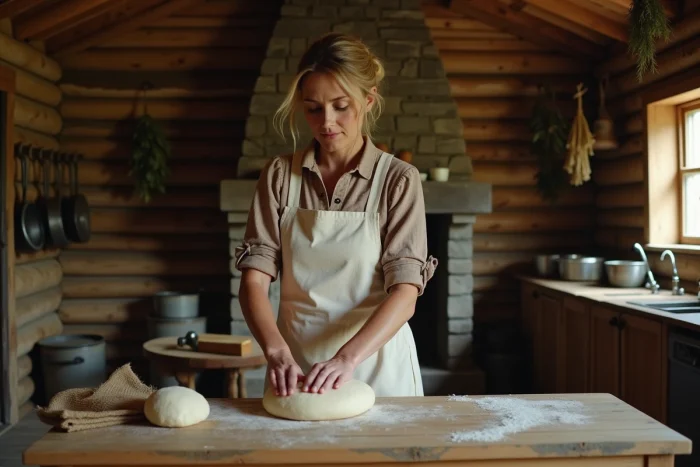
The Little House on the Prairie is not just a family series from the 1970s. It is a multi-layered cultural object, rooted in autobiographical novels, shaped by unique production choices, and intersected by contemporary debates on historical representation. Understanding this universe requires moving beyond nostalgia to examine what contributes to its real longevity.
Representation of Indigenous Peoples: The Debate Redefining the Wilder Legacy
The American Library Association has opened an ongoing debate about the place of Laura Ingalls Wilder’s novels in American public libraries. The issue at hand is how Indigenous peoples are depicted in the original texts, with formulations that reflect the prejudices of the time without providing context.
This debate, documented since the early 2020s, has led several cultural institutions to reevaluate the promotion of these works. The name Wilder has been removed from a major children’s literary award, a symbolic gesture that has divided fan communities and book professionals.
The television series, adapted by Michael Landon, had already distanced itself from certain passages of the novels. Landon rewrote several narrative arcs to inject messages of tolerance, sometimes contradicting the source material. This discrepancy between the books and the series today creates two distinct universes, well-known to enthusiasts who visit lapetitemaisondanslaprairie.fr.
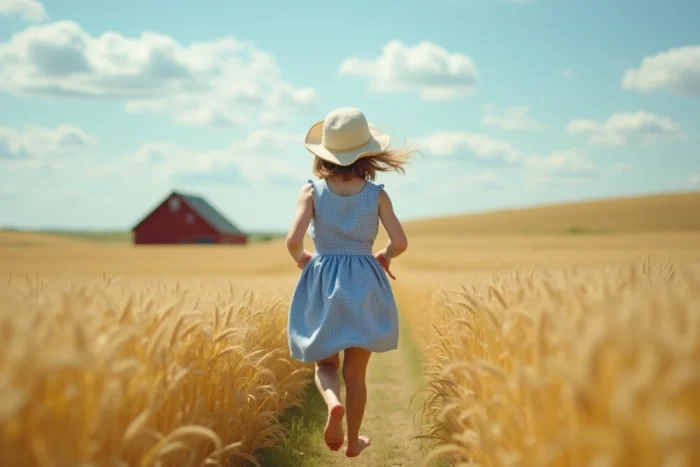
Laura Ingalls Wilder’s Novels and the Television Adaptation: Two Works Not to Be Confused
The autobiographical novels describe the daily life of a pioneer family in Minnesota, at Plum Creek, near Walnut Grove. The tone is factual, sometimes harsh. Laura Ingalls Wilder recounts hunger, cold, and the grasshoppers that destroy crops.
The television series transformed this survival narrative into a sentimental chronicle. Michael Landon, producer and lead actor (Charles Ingalls), added characters, invented plots, and significantly softened the reality described in the books. The character of Almanzo Wilder, Laura’s future husband, appears much earlier in the series than in the novels.
This distinction has direct consequences on reception. Readers of the novels encounter a sober text, rooted in a difficult era. Viewers remember a warm atmosphere, golden landscapes, and a recognizable soundtrack. The two audiences do not always speak about the same object.
The Production Choices of Michael Landon
Landon controlled the series at all levels: writing, directing, casting. He imposed a format where each episode could stand alone, with a clear moral. This choice allowed for massive reruns over decades, in France as well as in the United States.
The series was first broadcast in France on TF1 starting in 1976, then picked up by M6 in the 1990s. This circulation between channels solidified its status as a unifying program, but also fragmented its discovery: French viewers long remained unaware that some episodes had never been aired.
Collector Editions and Memorial Tourism: A Market Driven by Intergenerational Nostalgia
Flammarion Jeunesse continues to reissue the novels in collector format, with redesigned covers and updated prefaces. This editorial positioning targets an adult audience who buy back the books of their childhood as well as a young readership.
- The French reissues focus on the object: careful binding, period illustrations, boxes grouping several volumes. The book becomes a transgenerational gift.
- The Laura Ingalls Wilder Historic Home and Museum, in Mansfield, Missouri, remains an active place to visit. Its recent communication emphasizes American heritage more than the television series.
- Online fan communities, especially on social media, produce short, nostalgic content that fuels a regular resurgence of interest, independent of any television news.
This phenomenon of active memory distinguishes Little House on the Prairie from other series of the same era. The combination of a literary medium, a physical location, and a digital community creates a cultural ecosystem that renews itself without needing a reboot.
Netflix Reboot and the Future of the Franchise: What the Announcements Reveal
Rumors about a new Netflix production have circulated several times. A reboot would require a choice between fidelity to the novels and continuity with Landon’s spirit, two directions that are difficult to reconcile.
The casting and narrative tone of a potential adaptation will determine its reception. A series that would reintroduce the Ingalls characters without integrating current debates on the representation of Indigenous peoples would be exposed to immediate criticism. Conversely, a rewrite too far removed from the original material risks losing the existing fan base.
The question of filming location also arises. The original landscapes of Minnesota and Kansas are associated with the series’ imagery. Filming elsewhere would alter the visual texture that is part of the work’s identity.
A Universe That Resists the Reboot Format
Little House on the Prairie draws its strength from a precise temporal anchoring: the life of American pioneers in the 19th century, told without special effects or artificial twists. This narrative minimalism, which worked perfectly in the serialized format of the 1970s, poses a production challenge for a platform accustomed to fast-paced rhythms.
The franchise retains its value because it has not been overexploited. Few spin-offs, no official sequel after the series ended in 1983, and literary rights managed sparingly. This rarity protects the universe as much as it limits its commercial expansion.
The future of Little House on the Prairie is likely to play out less on a streaming screen than in libraries, museums, and online communities that keep the memory of Laura Ingalls Wilder alive.